Stone-specific care
- Stone-safe cleaning
- Open-fill inspection
- Moisture evaluation
- Breathable sealer selection
Natural stone cleaning & sealing
Stone-safe cleaning, fill inspection and breathable protection for travertine pool decks, patios and lanais in Yulee, Wildlight and Nassau County.
Surface preparation before sealing.
ASTM C144 kiln-dried sand.
Two coats for Florida conditions.
Written workmanship and adhesion coverage.
Stone-safe chemistry
Travertine is a calcium-based natural stone. The wrong cleaning chemistry, excessive pressure or an incompatible coating can permanently change the surface. Professional travertine sealing in Yulee starts with the stone itself, not a generic driveway process.
Cleaning chemistry and pressure are selected for natural stone rather than defaulting to aggressive concrete-cleaning methods.
Open pits, worn filler, previous products, staining and damaged areas are documented before sealing.
Outdoor stone needs a compatible system that accounts for moisture movement, exposure and the desired finish.
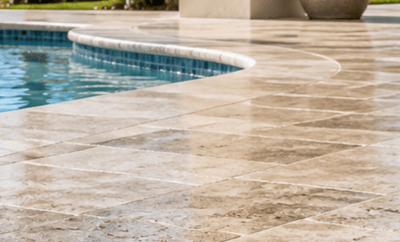
Moisture
Outdoor stone can take on moisture through joints, edges, pool splash and irrigation. An incompatible or overly heavy coating can contribute to clouding, adhesion problems or trapped moisture.
HydroSeal generally favors breathable penetrating protection for outdoor travertine after evaluating the stone, existing products, exposure and moisture conditions.
Filled travertine
Travertine contains natural voids, and many outdoor tiles are filled at the factory. Fill can loosen over time from traffic, water, weather or aggressive cleaning.
Visible fill loss is identified after cleaning so repairs can be discussed before a new sealer is applied.
Wildlight focus
Wildlight is a key Yulee service area, including established neighborhoods and Del Webb Wildlight. For homes with travertine or natural stone, the cleaning and sealing plan is based on the actual stone, moisture exposure, fill condition and previous products rather than a generic paver process.
Pool decks are evaluated for shade, moisture, fill loss, staining, previous products and wet-area use before sealing.
Patios, lanais and walkways receive stone-specific cleaning and breathable protection selected for outdoor exposure and the desired finish.
Process
Review stone condition, moisture, stains, fill and previous products.
Prepare adjacent pool, landscaping and nearby surfaces.
Use chemistry and controlled pressure appropriate for natural stone.
Review open fill, damage and remaining stains after cleaning.
Allow suitable dry-down based on shade, humidity and exposure.
Apply the selected breathable protection and provide cure-time guidance.
Finish choice
A natural finish keeps the stone closer to its current lighter appearance. An enhancing finish deepens color variation and may change the visual warmth of the stone. A test patch can help compare the look on the actual surface.
Local conditions
Florida humidity, pool splash, irrigation, shade and slower drying inside screened enclosures can contribute to organic buildup, mineral residue and moisture-related problems. Product choice should reflect those conditions.
Published starting rates
| Service | Starting rate |
|---|---|
| Travertine or natural stone | $1.60 / sq ft |
| Efflorescence treatment | +$0.05 / sq ft |
| Failed or film-forming sealer stripping | +$1.50 / sq ft |
| Fill repair | Quoted after inspection |
| Stone replacement or releveling | Quoted after inspection |
Rates are starting estimates and vary with stone type, fill loss, previous coatings, moisture, stains, access, repairs and project size.
Service areas
Avoid damage
Travertine is calcium-based, so acidic chemistry can react with the stone and leave dullness, roughness or permanent etching. Stone-safe cleaning matters before any sealer is considered.
Wet-area use
Any wet stone surface can become slippery. Traction depends on stone texture, product, application rate, contamination and maintenance. Pool-deck use should be considered when selecting a finish.
Questions
Travertine and natural-stone cleaning and sealing starts at $1.60 per square foot. Final pricing depends on the stone condition, pool or patio layout, access, open fill, staining, moisture, previous products and whether separate restoration or coating removal is needed. Travertine should be evaluated as natural stone rather than priced as a generic concrete-paver project. Photos of the full area plus close-ups of stains, open holes and any shiny or dark patches help us understand the likely scope before the final quote is confirmed.
Outdoor travertine generally benefits from a breathable penetrating sealer selected for natural stone and wet-area exposure. A penetrating system protects within the stone instead of relying on a heavy surface film. The correct choice still depends on porosity, previous treatments, moisture, the desired appearance and how the area is used. We inspect the stone first because a product that works on ordinary concrete pavers is not automatically appropriate for travertine. For suitable outdoor travertine, HydroSeal uses Trident Breakwall, an invisible water-based penetrating silane/siloxane treatment designed to resist water and salt penetration while maintaining a natural appearance.
Travertine is a calcium-based natural stone that can be etched by the wrong chemistry and damaged by overly aggressive pressure. Harsh acidic cleaners can dull or roughen the surface, and excessive pressure can enlarge weak areas or disturb existing fill. We use stone-appropriate chemistry, controlled cleaning and thorough rinsing so organic buildup and staining can be addressed without treating the travertine like a driveway.
Travertine naturally contains voids, and factory or field-applied fill can loosen with age, water exposure, traffic and previous cleaning. We inspect open pits, missing fill, loose pieces and damaged edges before sealing. Small repair needs can be discussed as part of the project, while larger movement, base problems or widespread deterioration may require a separate repair scope before the stone should be sealed.
Any wet natural-stone surface can be slippery. Slip risk depends on the stone texture, existing finish, sealer type, application rate, contamination and maintenance. For outdoor pool areas, we generally favor breathable penetrating protection rather than building a thick film on top of the travertine. The goal is to protect the stone while preserving its natural feel and keeping wet-area traction in mind.
Uneven color can come from moisture, organic buildup, mineral residue, previous sealers, repairs or differences in the natural stone itself. Dark areas that remain damp and white or shiny patches from older products should be evaluated before new sealer is applied. Sealing over unresolved moisture or an incompatible coating can lock in an uneven appearance, so cleaning, dry-down and inspection come before product selection.
Plan on about 24 hours before normal foot traffic and roughly 24–48 hours before normal pool use, unless project conditions require longer. Screened enclosures, high humidity, shade and limited airflow can slow curing. Furniture should remain off until the surface has had adequate time to cure as well. We provide site-specific guidance after sealing so the newly protected stone is not disturbed too early.
Outdoor travertine often benefits from a penetrating sealer because the stone is porous and exposed to water, staining and pool-area conditions. The critical point is that travertine should not automatically receive the same film-forming coating used on concrete pavers.
Usually, a penetrating treatment is the safer direction for an outdoor travertine pool deck when the goal is protection without creating a glossy surface film. Natural stone and concrete pavers are different materials and should not automatically receive the same sealing system.